Archives for category: Exhibitions

AirSpace Projects Closed until Friday October 3

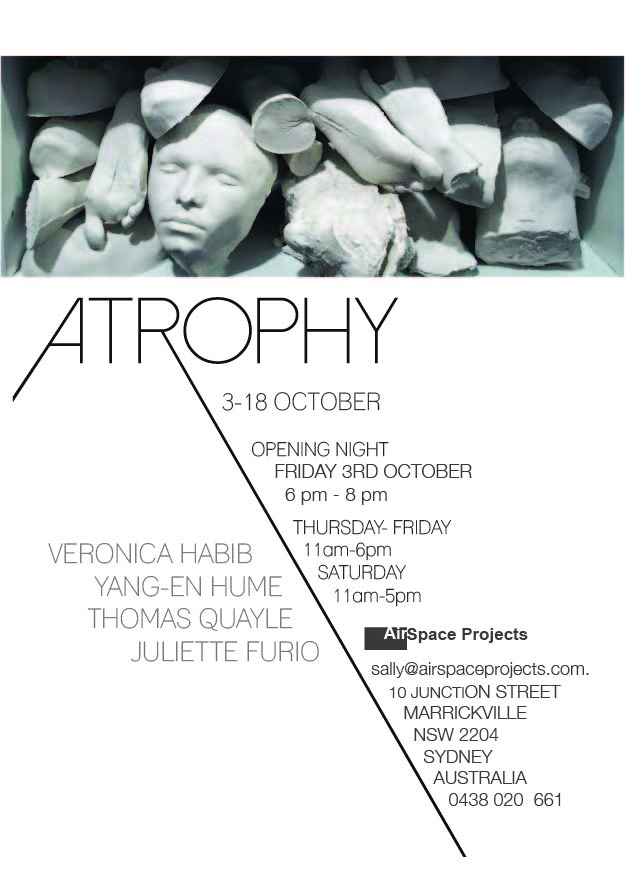
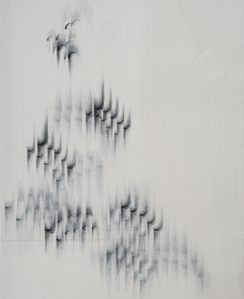
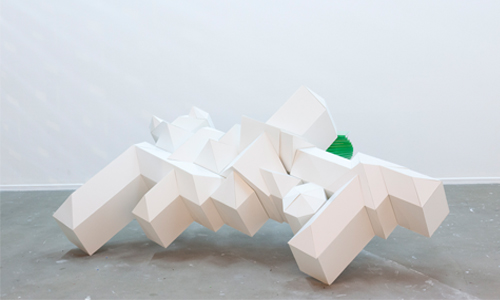
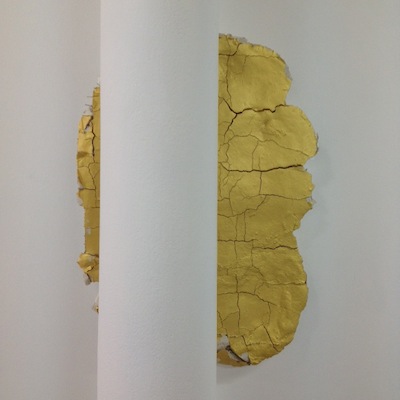
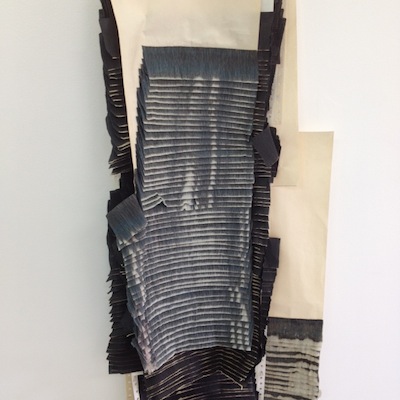
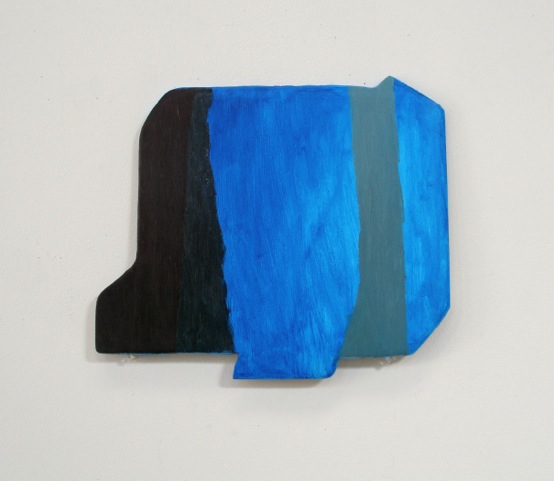
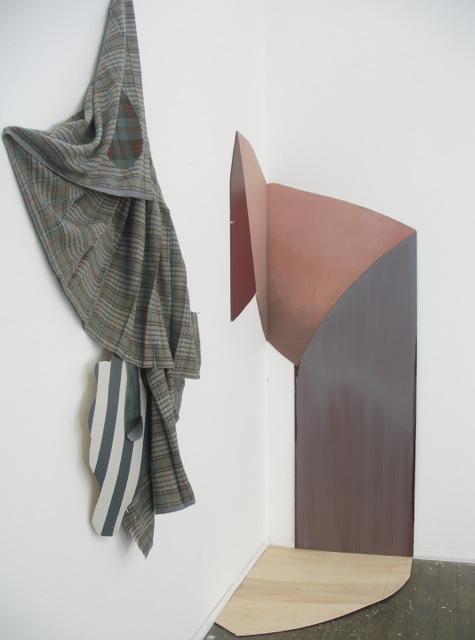
AirSpace Projects will now be closed while Atrophy, a collaboration between emerging arts Juliette Furio, Veronica Habib, Yang-En Hume and Thomas Quayle, is installed.

The exhibition will be open from 11.00am Friday 3 October with an opening event from 6.00 – 8.00pm.

Atrophy Invite copy blog

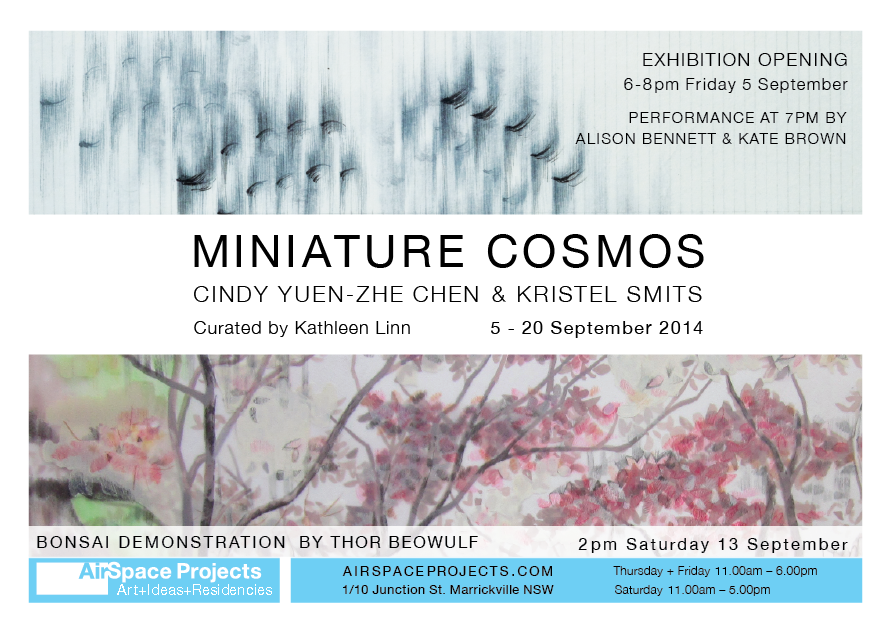
MiniatureCosmosInvite2

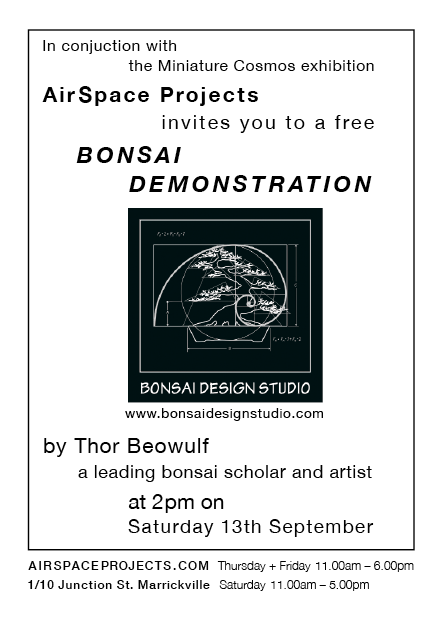
BonsaiDemoFlyer

Miniature Cosmos

An exhibition of new work by

Cindy Yuen-Zhe Chen & Kristel Smits

Curated by Kathleen Linn

5 September – 20 September 2014

Opening night

Friday 5 September 6.00 – 8.00pm

At 7.00pm there will be a performance by Alison Bennett and Kate Brown who will be responding to Cindy Yuen-Zhe Chen’s installation.

Creating order out of disorder is something that has fascinated artists, scholars and musicians for thousands of years across different cultures. The garden as a way of creating order and beauty in our surrounds is manifested in different ways around the world, reflecting the larger aesthetic and cultural concerns of a society. The strict lines and formalism of many European gardens contrast with Chinese and Japanese ideas that allow for meandering paths, a harmony with natural shapes, the discovery of hidden views or sparse surrounds that intend to cultivate spaces of the mind rather than living plants.

For Cindy Yuen-Zhe Chen and Kristel Smits aspects of Chinese and Japanese gardens have provided a source of inspiration as well as a conceptual path of enquiry in their work. Miniature Cosmos intends to delve a little deeper into this and other aspects of these two emerging artists’ practices.

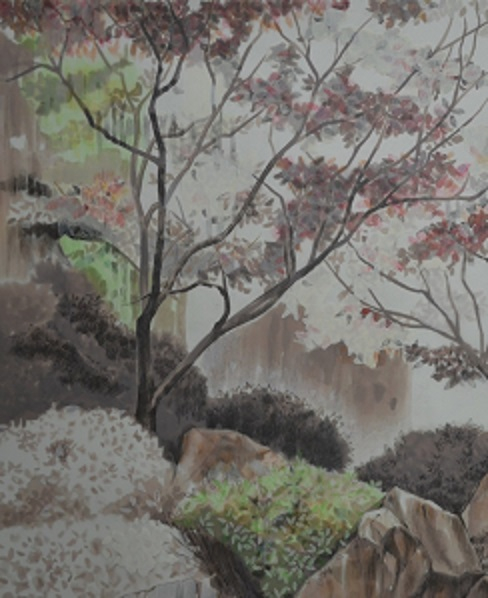
Maple Magic II -for Airspace website Smits  Kristel Smits, Maple Magic II


Kristel Smits’ mixed-media works on paper draw strongly on childhood experiences and personal interpretations of place. Her works in Miniature Cosmos are inspired by visits to Japanese gardens, both in the Sydney suburb of Auburn and in the Netherlands (The Hague), on her recent travels. Through a delicate and meticulous working process that she has been developing since 2007, her series of sepia-toned drawings are strongly evocative of memory while also possessing a mysterious, dream-like element. They contrast with her more highly coloured series of drawings, which take inspiration from botanical studies to create detailed renderings of individual plants, or carefully chosen garden views, set against dense Dutch woodlands. Her drawings will be exhibited alongside bonsai specimens, adding to the depth perceptions within the work.

A Drawn Out Moment Detail Web Chen  Cindy Yuen-Zhe Chen, A Drawn Out Moment (detail)


Cindy Yuen-Zhe Chen’s drawings have their origins in invisible phenomena. Her works form a personal response to natural sounds such as bird calls, the distant rumble of traffic or insect sounds observed at specific times of day. Her work explores the inner line of things that have no form. Taking Japanese ink on Chinese paper as her primary working tools, her drawings can be understood as a form of abstract musical graphic notation. For the opening night of Miniature Cosmos Cindy will, for the first time, be working with two performance artists – Kate Brown and Alison Bennett. They will create a performance-based dialogue with Cindy’s ink drawings, returning the work once again to the aural realm.

Miniature Cosmos features bonsai created by Thor Beowulf of the Bonsai Design Studio in Woollahra. We welcome you to attend the two Bonsai Demonstrations occurring at Airspace Projects as part of the wider program for the exhibition.

Exhibition is open for viewing from 11.00am Friday 5 September and runs to 5.00pm Saturday 20 September.

Marilyn Schneider

Lifestyle Display

Friday 22 August – Saturday 30 August

Opening Thursday 21 August, 6.00pm – 8.00pm

M.Schneider, Mega Mansion, 2012 low resMarilyn Schneider, Mega Mansion, 2012. Foam core, DVD cases, Chroma key paint, cardboard, 150 x 60 x 75 cm.


For Lifestyle Display Marilyn Schneider uses sculptural installation to examine the visual language of surfaces and logos in commercial spaces. These reconstructions critique the generic aesthetic looks and stylistic attitudes that present the viewer with a seemingly excessive display of wealth and status.

Using imagery derived from luxury trade shows, celebrity homes and high-end fashion stores, the installation investigates what the spectaculisation of the urban landscape reveals about our culture. Synthetic and industrial materials are used to create imitations that critique how different forms of artifice attempt to manipulate the subject in the public sphere.

Glenn Locklee has written a lovely positive review of Anie Nheu and Jan Fieldsend’s exhibition Playbox: sixtoeight

Playbox continues from Thursday 7 August to Saturday 9 August and again from 14 to 16 August, 11.00am to 6.00pm Thursday/Friday and to 5.00pm Saturday.

Problem Child
Anie Nheu, Problem Child, 2014. Acrylic paint on wire mesh. Photo credit: AirSpace Projects.

Jan Fieldsend
Jan Fieldsend, Quick Sketch, Swan, 2014. Paoers – carbon, crepe, found japanese woodblock. Photo credit: AirSpace Projects.

And just in case you want to know what it’s all about:

Sydney artists Anie Nheu and Jan Fieldsend work independently then collaboratively to bring together a collection of unlikely objects and materials to stunning effect. While the title Playbox holds childhood associations, this exhibition delves into adult considerations of bodies, emotions, memories and inter-cultural space. Seductive hand painted and drawn surfaces are juxtaposed against industrial and manufactured materials that carry signifiers of culture, place and history. The result is a sophisticated installation crafted with intense deliberation and intelligence.

Informed by the thoughts of the Japanese school of thought Mono-ha (Nheu) and the practice of Ikebana (Fieldsend), extensive time and attention has been paid to the arrangement of things to provide a multi-sensorial experience. Western art history has not been overlooked and references to Minimalism, the Pattern and Decoration Movement and Abstraction abound.

While there is a strong sense of play and collaboration in this installation, playmates Nheu and Fieldsend have left behind a sense of nostalgia, and an emotional residue that is unsettling but fascinating. Works titled Problem Child, Disassembled Monument for a Slow-Motion Dancer and The Tooth Fairy are all shaped and placed in such a way that that it leaves no doubt that this installation is not a consequence of child’s play.


Anie Nheu and Jan Fieldsend


11.00am Friday 1 August – 5.00pm Saturday 16 August 2014

Anie Nheu Playbox image 1
Anie Nheu, Crepuscule, 2014. Oil on board, 30 x 25cm. Image Credit: AirSpace Projects

Opening tonight: 6.00 – 8.00pm, 10 Junction Street, Marrickville.

Sydney artists Anie Nheu and Jan Fieldsend work independently then collaboratively to bring together a collection of unlikely objects and materials to stunning effect. While the title Playbox holds childhood associations, this exhibition delves into adult considerations of bodies, emotions, memories and inter-cultural space. Seductive hand painted and drawn surfaces are juxtaposed against industrial and manufactured materials that carry signifiers of culture, place and history. The result is a sophisticated installation crafted with intense deliberation and intelligence.

Informed by the thoughts of the Japanese school of thought Mono-ha (Nheu) and the practice of Ikebana (Fieldsend), extensive time and attention has been paid to the arrangement of things to provide a multi-sensorial experience. Western art history has not been overlooked and references to Minimalism, the Pattern and Decoration Movement and Abstraction abound.

While there is a strong sense of play and collaboration in this installation, playmates Nheu and Fieldsend have left behind a sense of nostalgia, and an emotional residue that is unsettling but fascinating. Works titled Problem Child, Disassembled Monument for a Slow-Motion Dancer and The Tooth Fairy are all shaped and placed in such a way that that it leaves no doubt that this installation is not a consequence of child’s play.

Playbox

An installation of disparate works

by

Anie Nheu and Jan Fieldsend

Opens 6.00 – 8.00pm Friday 1 August

Pbox1 Invite image

Image: © 2014 Anie Nheu and Janice Fieldsend

Exhibition runs from

Friday 1 August to Saturday 16 August

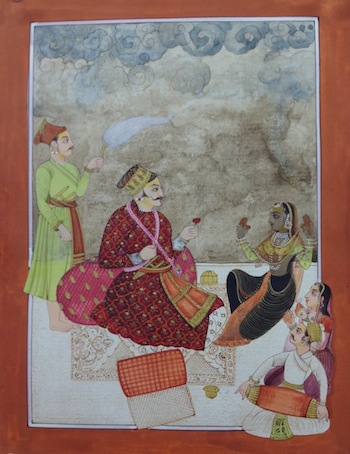
Today, Saturday 19 July, is the last day to catch Ajay Sharma’s exhibition The Speed of Life.  Why not come along and join us between 3.00 – 5.00pm to say farewell to Ajay and to take the opportunity to talk to him about his work.  The process employed to create a miniature painting is incredible and the symbolism and narratives in the imagery are fascinating.

Ajay MaharajaAjay Sharma, Maharraja Dhiraj Singh, 2013. Natural pigments on paper. 21 x 16cm. Photo credit: AirSpace Projects.


AirSpace Projects. Open today, Saturday 19 July, from 11.00am – 5.00pm

10 Junction Street, Marrickville, Sydney

DWR_facebook

revisited

Andrew Frost, Curator of Conquest of Space: Science Fiction and Contemporay Art at Galleries UNSW, was going to open the recent Fly-In Fly-Out exhibition Danger Will Robinson! at AirSpace Projects. Due to an ‘outage’ at Sydney Airport, Andrew was stranded in Brisbane and declared Lost in Space.  Needless to say he did not make the opening.  Andrew did write an opening speech and today, thanks to his generosity, we are able to post it on the AirSpace Projects site.  I have included it here but it’s usual home will be on the Danger Will Robinson! page in Past Exhibitions.

Thanks Andrew.


Danger Will Robinson!

Andrew Frost

One of the most critically important science fiction short stories of the modern era was written by someone you’ve probably never heard of – the author’s name is Pamela Zoline and her story is The Heat Death of The Universe.

Published in the July-October 1967 issue of New Worlds magazine and described by the Encyclopedia of Science Fiction as an iconic works of the New Wave, the story has been anthologised at least nine times in various influential short story collections and is now widely available as a PDF online.

Writing in Daughters of The Earth: Feminist Science Fiction in the 20th Century, Mary E. Papke describes Zoline’s story:

“Heat Death” might not at first reading strike the reader as science fiction at all. It contains no bug-eyed monsters, interplanetary flights, post-apocalyptic worlds, or technological marvels. It focuses not on outer space as much as it does inner space—notably that of a woman—and the geography of the mundane—that of the home and the supermarket—rather than the fantastic or extraordinary. […] Zoline’s story explores relational spaces, those shared by mothers and children, husbands and wives, domestic economy and the public sphere. The story [extrapolates] from the everyday reality of a middle-class American wife and mother a nightmare vision of endless meaningless routine, demands, and expectations, focusing intently on issues of gender, the ethics of care, and the promise of the future. Within this domestic space, “aliens” appear in the guise of children, the mother-in-law, high and low cultural figures such as Shakespeare and Tony the Tiger, and even, in the most disturbing scenes for the female protagonist, the central character herself.”

Another fascinating aspect to the story was that it was produced by an artist. Zoline who was at the time a 26-year-old American expat living in London interested in radical art and agit-prop and had become a part of author-editor Michael Moorcock’s Notting Hill artist circle. Moorcock was the new editor of the previously staid and formulaic New Worlds magazine and he had quickly turned it into a radical publication with an editorial manifesto that sought to change the very nature of science fiction itself. Around the magazine Moorcock had rallied a group of distinguished writers and critics to help him win support from the British Arts Council to help finance publication. And along with many other artists, Zoline contributed illustrations for New Worlds and Heat Death was the first story she’d written since high school. It appeared in the same month that one of her paintings was exhibited at the Tate Gallery. Zoline was a highly active member of the Notting Hill group both as an artist and writer and she facilitated a number of the group’s more radical excursions outside the strict confines of the SF print genre, among them JG Ballard’s sole foray into becoming an exhibiting avant garde artist – it was Zoline who had curated Ballard’s Crashed Cars exhibition at the Camden New Arts Lab in 1970.

Today the New Wave itself isn’t so well known outside SF circles, but it forms one of the first significant breaks in the otherwise conservative history of the genre. In essence, the New Wave was the intrusion of avant garde and modernist experimentation in both writing styles and subjects of science fiction, but also a tactical alliance with like-minded radicals in visual arts, design, film, media and television.

Form the perspective of the future looking back to the art practices of the 1960s, it’s interesting to note that today the entirety of Zoline’s practice – from painting and illustration to writing and curating – looks like the CV of any number of contemporary artists. But in the late 1960s the silos of creativity were still very much in place and the mainstream of SF was embodied by long running US magazines such as Astounding Science Fiction whose editor John W. Campbell was writing infamous editorials that, for example, called upon the US government to use its troops to fire upon anti-Vietnam war demonstrators. In the heightened political fever of the late 60s, in the era of Paris, Prague and Mexico City, in the era of student unrest and the expanding American wars of South East Asia, science fiction was suddenly torn into two factions – the old guard vs. the new radicals.

The New Wave was a genuinely multi-media avant garde, ironic and self aware, pretentiously sincere and, for about ten years from 1967, a challenge to the orthodoxy of mainstream SF. Like all radical movements it eventually descended into a mannerist phase before fading away completely in the noise of the post Star Wars era that began in 1977. But its effect could still be felt in he subsequent ructions that define the history of recent SF literature – cyberpunk was its spiritual heir in the 1980s and ‘90s and the more recent attempts to kick start a radical agenda in SF such as Mundane SF and or in the New Space Opera, each reflect New Wave’s world view.

Zoline’s story is considered an important work in that tradition of radicality in SF because its form and content anticipated the meta-fictions of post modernism – its narrative the feminist redefinition of SF’s potential subject matter – and if we think of Heat Death as a work of art, it’s a valorization of the value of the everyday while questioning the hetero-orthodoxy of consensus reality.

Science fiction is, in my view, a metagenre – a collection of ideas, themes, tropes and concepts that are easily recognised but devilishly hard to categorise. There’s no single idea or narrative structure that defines it, no setting or relationship that it can’t conceivably contain. SF, like most popular genres, is essentially democratic in the sense that its populism is accessible, and it evolves in response to its audience.

And this is science fiction’s paradox – while it contains within it a vast field of practice and a huge potential for a true multiplicity – it has all like all mass genres a tendency towards a conservatism that is absolute and rigid. My view is that real SF is created from the outside – from the edges – in the zone of the science fictional, that space that produces odd artefacts that might not first appear to be SF but, like Zoline’s story, suggest another future – a space for otherness to flower, to take centre stage and redefine that rule of orthodoxy into a more agreeable and egalitarian present.

© 2014 Andrew Frost

Ajay Sharma: The Speed of Life. It was a wonderful opening night …

Ajay Sharma’s exhibition The Speed of Life opened at AirSpace Projects on Thursday 3 July with much fanfare. The Deputy Mayor of Marrickville Councillor Rosana Tyler introduced Mr Pawan Luthra who spoke so generously about Ajay Sharma’s work. We thought it was well worth posting. The Speed of Life will continue until 5.00pm Saturday 19 July.
Green Horse
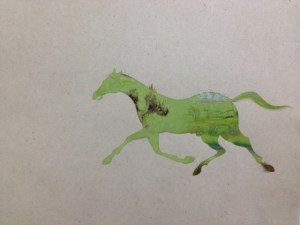
Ajay Sharma, Mother Nature (Impairment of Nature) from The Speed of Life series, 2014, pigment on paper, 30.5 x 40cm. Image credit: AirSpace Projects.

Pawan Luthra’s Speech

Deputy Mayor Councillor Rosana Tyler, Ajay Sharma, Sally Clarke, Brenda Factor and guests, thank you for inviting me today.

Growing up in India, we were surrounded by many examples of miniature art. We had them in our homes and in our schools, and often on the walls at work also. It is a great pleasure for me to be here: something that was such an essential part of my childhood, is being appreciated in my new home.

I have never been good at art myself, but as a child I would often wonder at how tedious and painstaking it must have been for the artist to create the paintings that hung in my hallway, and that my mum cherished so much. The margin of error seemed so narrow, and having no confidence in my own fine motor skills, I made up my mind fairly early that I would not enter a field in which my mistakes would be laid bare for easy scrutiny.

And so you will understand, what a privilege it has been for me to meet Ajay Sharma, India’s leading miniaturist. In a career spanning some 40 years, Ajay has devoted himself to keeping alive a centuries’ old tradition. As head of a studio of artists and students in Jaipur that was launched way back in 1984, he is involved in all aspects of the art form, including composition, drawing, conservation, copy work, in the research and preparation of pigments.

He has some fascinating stories to tell about his art, not just the process in which he creates the wasli paper on which the works are made, but also of how in the early days, he made his own paintbrushes: he physically caught the squirrels to extract the fine hair from their tails. He will assure you though, that no squirrels were killed to make up the brushes that created these, or indeed any, of his works.

Ajay has also been instrumental in taking the Rajasthani style of miniature art to some of the world’s leading art institutions, in the form of both exhibitions and workshops. Many non-Indian artists have now taken up the art form.

Interestingly, the theme of his current exhibition, The Speed of Life, finds much parallel with his own life’s work. While he has dedicated his energies to conserving and perpetuating an age-old practice, he sees around him a world that is modernising at fast pace. The Speed of Life is a lament on the loss of traditions and family values, and an increasing disconnect with nature, that such modernisation and globalisation has brought in.

The horse of course, has interesting symbolism. Representing a driving force that carries you through life, it is a symbol not only of life energy, but also of freedom of expression. As such, it turns out to be a perfect medium for Ajay.

As an observer myself of trends in the psycho-social fabric of contemporary India, I do agree with Ajay. The change is quite tumultuous really, and like a tsunami sweeping across the land, it is leaving behind some debris in its aftermath. The particular social problems that have arisen in India recently and made headlines across the world, are an unfortunate side effect of this fast-paced change. I don’t want to bring a sombre note to tonight’s event, but I think this has a significant bearing on the works of art displayed here. They speak of the far-reaching psycho-social implications of rampant and unsustainable modernisation.

Unlike Ajay however, I am a bit more optimistic about India’s youth. My own view is that as a developing country, India is going through an adolescence of sorts, struggling with issues of identity as it grapples with the notions of tradition vs modernisation. It’s going to be interesting to see how the ‘teenage’ India resolves this crisis, but at the end of it, it will evolve into unique selfhood.

India will modernise – it must modernise. And just as Ajay’s particular passion has evolved through Persian, Islamic, Mughal, Rajput, even British, influences, and survived to tell its own tale as an amalgam of all these, yet an independent and innovative art form that can be used to cast a contemporary look on life, India will make it too– with its own particular mix of traditionalism and modernism.

I thank Sally and Brenda in their vision of putting this exhibition together and sharing with all of this the talents of Ajay Sharma.

Thank you.

Pawan Luthra 2014 ©

For more information about this exhibition see Current Exhibition on this site.